シンクタンクからの眼 2026年5月7日
SNSとAI時代に向けたアリストテレスの『中庸』から得られる教訓『Wisdom Columns』
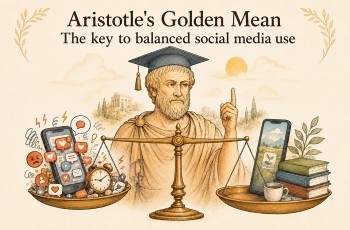
今回は『賢者コラム Wisdom Columns』として、学術界のみならず産業界を含む多方面にわたる分野で深い洞察と卓越した知見をもって、多くの人々を啓発し導いてこられた金澤権(Taekwon Kim)博士の寄稿文をご紹介いたします。
SNSとAI時代に向けたアリストテレスの『中庸』から得られる教訓
私たちは今や、ソーシャルネットワーキングサイト(SNS)が「FOMO(取り残されることへの恐怖)」や貪欲に基づく快楽主義的な過剰を増幅させ、人々を群集心理へと駆り立てる「歪曲のエンジン」としての役割を果たしているという事実を知っている。また、私たちはJOMO(見逃す喜び)のような相殺の動きや、ソーシャルメディアで提唱されるストア派の価値観も目撃している。アリストテレスの時代の社会的雰囲気は、現在のソーシャル・ネットワーキング・サイトと人工知能時代の雰囲気と非常に似ていた。私たちはアリストテレスの教えをもとに、ソーシャルメディアとAIがもたらす深刻な悪影響を克服する方法についての洞察を得ようと思う。彼は、美徳こそがギリシャが直面した問題の解決策であると提唱した。
1.過去と現在に対する社会的雰囲気の比較
アリストテレスが生きた時代(紀元前350–335年頃)のギリシャの社会的雰囲気と、現代のソーシャルメディア時代は、政治的不安定、激しい社会的比較、理性的な議論よりも感情が優先されるという特徴を共有しており、驚くべき類似性を示している。技術は異なるが、その裏に潜む心理的・社会的な問題たちは驚くほど類似している。
両時代とも、深い分裂と統合された共同体秩序の崩壊が特徴である。アリストテレスは、民主主義が危機に瀕し、都市国家体制が崩壊しつつあった時代に生きていた。アテネは民主主義と寡頭制の間を行き来し、内部の派閥主義によって繰り返し不安定化した。これにより、現実の圧力の中で民主主義的理想が崩れ去るにつれ、理想主義と実用主義の間の文化的緊張と葛藤が生じた。一方、今日のSNSは、ユーザー維持を促すために、イデオロギー的に極端なコンテンツを体系的に報奨する参加型構造で運営されている。アルゴリズムは、ユーザーがすでに同意しているコンテンツを優先的に表示することで「エコーチェンバー」を生み出し、これを通じて集団的アイデンティティを強化し、イデオロギー的過激主義と感情的な二極化の両方を増幅させる。
「群衆」の影響力と感情的な扇動は、両時代において核心的なテーマである。アリストテレスや他の富裕なエリートたちは、当時急進化していたアテネの民主主義を「暴徒の支配」と見なし、賢明で実用的な指導力よりも大衆の扇動を優先すると考えた当時の政治体制に懐疑的だった。現代のソーシャルネットワーキングプラットフォームは、怒り、恐怖、激怒が最も伝染力の強い感情であるという「反応の規模」の論理に基づいて運営されている。これは、コンテンツ制作者が露出を得るために意図的に否定的な反応を引き起こす「レイジベイト(rage-bait)」というビジネスモデルを生み出した。これは本質的に、アリストテレスが懸念した「暴徒の支配」のデジタル形態であり、感情的な強度が批判的判断よりも優先される現象である。
どちらの時代も、極度の富と地位をめぐる競争がもたらす不安定化の効果に頭を悩ませている。紀元前4世紀は、経済的不平等が深刻化していた時期であった。アリストテレスは、極度の富が傲慢を生み、極度の貧困が怨恨を生むとし、その両方が社会的に危険であると主張した。彼は貪欲(pleonexia)を単なる個人的な悪徳ではなく、共同体の結束を損なう政治的脅威と見なした。
一方、SNSは、「より多く」への欲求が物質的な富を超え、数値化された地位や関心(「いいね」、フォロワー、バイラルリーチ)にまで拡大する「デジタル化された」形の貪欲を深化させる。これは、成功に対する個人の基準点を外部化し、他人が持っているという理由だけで何かを渇望する模倣的な野心を呼び起こす「持続的な社会的比較エンジン」を生み出す。
両時代とも、哲学、特にストア哲学と黄金律は、混沌とした環境を切り抜けるための不可欠なツールとして台頭した。アリストテレスの黄金律は、「アテネの紳士」が政治的・社会的激動の中でユーダイモニア(eudaimonia)を達成するために、バランスの取れた中道(例:怠惰と貪欲の間にある適切な野心)を見出せるようにする実用的な診断ツールであった。今日、「ソーシャルメディア・ストア主義」の復興が起きている。SNSの構造が、心理的な脆弱性を悪用し、自己制御能力を弱めるように設計されているだけに、ストア主義やJOMOを実践することは、一部の人々によって構造的な抵抗の行為として描かれている。つまり、それは「ユーダイモニアの浸食」によって利益を得るシステムから、認知的・道徳的な主権を取り戻す方法なのである。
究極的には、どちらの時代も、個人が自身の社会的環境に対する統制力を失ったと感じており、外部からの過剰に対抗して自己の人格を強固にするために、徳に基づく枠組みを求めるという特徴を見せている。
2. すべての徳は二つの極端の間にある
アリストテレスは、徳は固定された点ではなく、動的な均衡、すなわち過剰と欠乏の間の黄金律であると教えた。「したがって、徳とは選択に関わる人格の状態であり、理性によって決定され、実践的知恵を持つ者が定めるべき、すなわち我々にとっての相対的な中間に位置している。」 (アリストテレス、『ニコマコス倫理学』第2巻第6章)
野心(Ambition):野心家は、名誉と功績を適度な範囲で追求する―怠惰に耽ることもなければ、執拗な獲得欲のために他者を踏みつけることもない。
勇気(Courage):勇気とは、臆病による麻痺と、危険を無謀に軽視することの中間に位置し、理性的確信をもって真の脅威に立ち向かうものである。
節制(Temperance):節制ある人は、肉体的快楽を適度な範囲で享受する―禁欲によって感覚が麻痺することもなければ、欲望に支配されることもない。
寛大さ(Generosity):寛大な魂は、適切な量、適切な人々に、適切な時に与える―蓄えすぎも、浪費的な贅沢も避ける。
気高さ(Magnificence):気高い人は、品位ある判断をもって公共の利益に大規模な資金を提供する―けちけちすることも、見せびらかすような浪費もしない。
高潔な魂(Greatness of soul):高潔な人は自らの偉大な価値を自覚し、相応の栄誉を主張する―自虐的でもなければ、虚栄心から自慢げでもない。
適切な誇り(Proper Pride):些細な栄誉においては、徳ある人は自分にふさわしいものだけを求める―称賛を無関心にすることもなければ、執拗に名誉を渇望することもない。
忍耐(Patience):穏やかな気性は、正しい事柄と相手に対し、正しい方法で怒りを感じることを意味する。すべての怒りを抑え込むこともなければ、些細なことで爆発することもない。
真実性(Truthfulness):真実な人は、自分自身を正確に表現する―効果を狙って自分を卑下することもなければ、印象づけるために誇張することもない。
機知(Wit):機知に富む人は、適切な場面で軽妙さとユーモアをもたらす―退屈で喜びのない人でもないし、何でもかんでも冗談にする道化師でもない。
親しみやすさ(Friendliness):親しみやすい人は、心地よく交流する―誰に対しても争いごとを起こすわけでもなく、誰に対してもへつらうように同意するわけでもない。
アリストテレスによれば、真の美徳とは欠如と過剰のバランスから生まれ、中庸は人の内面から生じ、それがユーダイモニアへと導く。
3.「注意力の経済」という外的圧力から、ユーダイモニアという内的充足への転換
社会的圧力に立ち向かうには、まず二つのタイプのウェルビーイングを区別しなければならない。第一に、現代の「幸福」(快楽的)は、しばしば喜び、気分、あるいは人生への満足感といった主観的な感情として定義される。このような状態は「快楽の回転木馬」に非常に脆弱であり、楽しい感情を追い求めれば追い求めるほど、得られる報酬は次第に減っていく。一方、ユーダイモニア(アリストテレス的)は、美徳と卓越した理性的活動に基づく、客観的で人生全体にわたる繁栄の状態である。これははかない感情ではなく、生涯を通じて人間の潜在能力を実現する生き方である。ユーダイモニアを志向するということは、短期的な外部からの承認を追求する代わりに、人格と目的に基づいて決断を下すことを意味する。
現代のSNSは、成功に対するあなたの基準点を外部に転嫁させる「歪曲エンジン」としての役割を果たしている。ソーシャルメディアは、健全な野心を模倣的な形へと変質させることが多い。つまり、自分の価値観よりも、他人の目に映る成果(「いいね!」、地位、ライフスタイル)を模倣した欲望へと変えてしまうのだ。さらに、こうしたプラットフォームは、貪欲と密接に関連した「FOMO」を最大化するように設計されている。これらはいずれも、地位や経験をいくら手に入れても決して満足できない「満たされない内面」に起因する。
節制の実践:中庸の探求
アリストテレスの「黄金律」は、過剰と欠乏という二つの悪徳の間にある「中道」である。これは数学的な平均ではなく、特定の文脈において「正しい理性」によって決定される選択であり、あるプロジェクトや社会的圧力を黄金律の観点から評価しようとするなら、私たちは自分自身に次のような問いを投げかけなければならないだろう:
1. 欠如:恐怖、怠惰、あるいは安楽への欲求のために、真の機会や責任を回避しているか?
2. 過剰:適切な水準を超えて、より多くの地位、金銭、あるいは支配権を得るために、自分の誠実さ、他者の幸福、あるいは合理的な限界を喜んで犠牲にしているか?
3. 中庸(美徳的な野心):自分の誠実さと他者の繁栄と両立し得る方法で、真に価値あるものに向かって努力しているか?
ストア派とJOMO構造的抵抗
社会的圧力が圧倒的だと感じられる時、私たちはストア派とJOMOの原則を「構造的抵抗」のツールとして活用することができる。
第一に、私たちがコントロールできるものとできないものを分類し、自分の力だけでできること(自分の思考と選択)にのみ集中し、「いいね」や地位といった外部の社会的シグナルは「無関心な事柄」として扱う。
第二に、JOMOを選択的な野心として活用する。JOMOは受動的な撤退ではなく、意図的な選択である。比較的性格的な「関心経済」から意識的に脱退することで、真の幸福に必要な深い集中力や自己制御といったユーダイモニック(eudaimonic)な能力を守ることができる。
4. 長期的な自己修養
人格は習慣的な選択を通じて形成される。研究によると、ユーダイモニックな動機(成長と意味の追求)は自制心を強化し、長期的にはより大きな人生の満足につながる一方、快楽主義的な動機(即時の快楽の追求)は自制心を弱め、依存症のリスクを高める。着実に「中道」を選択することで、あなたは正しい対象を正しい方法で存分に、しかしバランスを保ちながら熱望できる人格を養うことになる。
*以下にて、金 澤権(Taekwon Kim)博士の略歴をご紹介いたします。
金澤権(Taekwon Kim)博士の略歴
金澤権(Taekwon Kim)博士は、学術的成果と国際的活動を通じて広く認められている著名な学者であり、理論と実務を兼ね備えた経営専門家として、学界と産業界の双方において卓越した業績を築いてきた人物です。
ペンシルベニア大学大学院にて経営学博士号を取得後、カリフォルニア大学サンディエゴ校および延世大学にて教授を歴任し、研究・教育の発展に寄与してきました。一方で、S&T重工業経営顧問、大宇精密、S&T大宇、S&Tモータース、S&Tモーティブの代表理事、ならびに運海研究院院長などを歴任し、産業界においても優れた経営成果を挙げてきました。
さらに、韓国二輪自動車産業協会長、中国中央民族大学 特別客員教授などを務め、国際的な学術・産業交流にも貢献しています。現在はSNTホールディングス及びイーストブリッジ・パートナーズにおける経営投資顧問をはじめ、幅広い分野で戦略的助言とコンサルティングを提供するとともに、一般社団法人アジア経済文化研究所 理事兼首席研究委員として、長年の研究と実務経験から得た知見を後進に伝え、人材育成にも尽力しています。
**以下、金 澤権(Taekwon Kim) 博士ご論考の原文を掲載いたします。
Lessons from the Golden Mean of Aristotle for the Age of Social Networking and Artificial Intelligence
We now know that SNS (social networking sites) act as a distortion engine, amplifying FOMO (fear of missing out) and the hedonistic excess of greed, driving people into a mob mentality. We have also noticed counterbalancing movements, such as JOMO (the joy of missing out), and stoic values being advocated on social media. The social atmosphere in the era of Aristotle was very similar to that in the current age of social networking sites and artificial intelligence. We will try to gain some insight into how to overcome the serious negative impacts of social media and AI, based on Aristotle's teachings. He suggested that virtue was the solution to the problems facing Greece.
1. Comparison of social atmospheres: Then versus now
The social atmosphere in Greece during Aristotle's lifetime (c. 350–335 BC) and the modern social media era share striking similarities, characterised by political instability, intense social comparison and the prioritisation of emotion over reasoned discourse. Although the technologies differ, the underlying psychological and communal issues are strikingly similar.
Factionalism and social polarisation
Both eras are characterised by deep divisions and the breakdown of a unified communal order. Aristotle lived during a period of democratic strain and the collapse of the city-state system. Athens oscillated between democracy and oligarchy, repeatedly being destabilised by internal factionalism. This created cultural tensions and conflicts between idealism and pragmatism, as democratic ideals crumbled under real-world pressures. In contrast, SNS are now governed by an engagement-based architecture that systematically rewards ideologically extreme content to drive user retention. Algorithms create 'echo chambers' by surfacing content with which users already agree, thereby reinforcing tribal identity and increasing both ideological extremism and affective polarisation.
Mob rule' versus algorithmic outrage
The influence of the 'crowd' and emotional provocation is a central theme in both periods. Aristotle and other wealthy elites viewed the radicalised Athenian democracy of the time as 'mob rule', being sceptical of a system that they felt prioritised the impulses of the masses over wise, practical leadership. Modern social networking platforms operate on a 'magnitude of response' logic, where anger, fear and outrage are the most contagious emotions. This has given rise to the 'rage-bait' business model, in which content creators deliberately provoke negative reactions to gain visibility — essentially a digital form of the 'mob rule' that Aristotle feared, where emotional intensity overrides critical judgement.
Economic Inequality and Status Greed
Both eras struggle with the destabilising effects of extreme wealth and status competition. The 4th century was marked by increasing economic inequality. Aristotle argued that extreme wealth led to arrogance and extreme poverty to resentment, both of which were socially dangerous. He viewed greed (pleonexia) as not just a personal vice, but also a political threat that violated the communal fabric. In contrast, SNS intensify a 'digitised' form of greed, where the desire for 'more' extends beyond material wealth to quantified status and attention (likes, followers and viral reach). This creates a 'continuous social comparison engine' that externalises a person's reference points for success, leading to mimetic ambition — desiring things only because others have them.
Virtue as a Form of Resistance
In both timeframes, philosophy — specifically Stoicism and the Golden Mean — emerged as a necessary tool for navigating a chaotic environment. Aristotle’s Golden Mean was a practical diagnostic tool that enabled the 'Athenian gentleman' to find a balanced middle path (e.g. proper ambition between sloth and greed) in order to achieve eudaimonia amidst political and social turbulence. Today, there is a 'Social Media Stoicism' renaissance. As the architecture of SNS is designed to exploit psychological vulnerabilities and erode self-regulation, practising Stoicism or JOMO is described by some as an act of structural resistance — a way to reclaim cognitive and moral sovereignty from a system that profits from 'eudaimonic erosion'.
Ultimately, both eras represent periods in which individuals feel they have lost control over their social environment, turning to virtue-based frameworks to anchor their character against external excess.
2. Every virtue lies between two extremes
Aristotle taught that virtue is not a fixed point, but a dynamic balance — the golden mean between excess and deficiency. 'Virtue, then, is a state of character concerned with choice, lying in a mean — that is, the mean relative to us — determined by reason and in the way in which the man of practical wisdom would determine it'. — Aristotle, Nicomachean Ethics, Book II, Ch. 6
Ambition: The ambitious person pursues honour and achievement in due measure — neither lying idle nor trampling others in relentless acquisition.
Courage: Courage lies between cowardly paralysis and reckless disregard for danger; it involves facing genuine threats with reasoned confidence.
Temperance: The temperate person enjoys bodily pleasures in moderation — neither ascetically numb nor enslaved by appetite.
Generosity: The generous person gives the right amount to the right people at the right time, avoiding both hoarding and wasteful extravagance.
Magnificence: Magnificent people fund public goods on a grand scale with tasteful judgement, avoiding both stinginess and ostentatious spending.
Greatness of soul: The magnanimous person recognises their own worth and accepts appropriate honours — neither self-deprecating nor boastful.
Proper Pride: The virtuous person seeks only the honours they deserve, neither indifferent to recognition nor obsessively honour-hungry.
Patience: Having a good temperament means feeling anger towards the right people in the right way — not suppressing all anger nor erupting over trivialities.
Truthfulness: The truthful person represents themselves accurately, neither self-deprecating for effect nor exaggerating to impress.
Wit: The witty person brings levity and humour appropriately — neither dull nor a clownish buffoon who jokes about everything.
Friendliness: The friendly person interacts pleasantly — neither contentiously opposing everyone nor sycophantically agreeing with everyone.
According to Aristotle, real virtue comes from striking a balance between deficiency and excess, and the golden mean comes from within a person, leading to eudaimonia.
3. Shifting from the external pressures of the 'attention economy' to the intrinsic fulfilment of eudaimonia.
Understanding the goal: eudaimonia vs. hedonic happiness
To navigate social pressures, one must first distinguish between the two types of well-being. Firstly, modern 'happiness' (hedonic) is often defined as a subjective feeling of pleasure, mood or life satisfaction. This state is highly susceptible to the 'hedonic treadmill', whereby chasing pleasant feelings yields diminishing returns. In contrast, eudaimonia (Aristotelian) is an objective, life-wide condition of flourishing, grounded in virtue and excellent rational activity. It is not a fleeting feeling, but rather a way of living that realises human potential throughout one's life. Aiming for eudaimonia means making decisions based on character and purpose rather than seeking short-term external validation.
Identifying External Pressures: The Mimetic Trap
Modern social networking sites (SNS) act as 'distortion engines' that externalise your reference points for success. Social media often turns healthy ambition into a mimetic form — desire modelled on others' visible achievements (likes, status and lifestyle) rather than your own values. Furthermore, these platforms are designed to maximise FOMO, which is closely linked to greed. Both stem from an 'insatiable core' where one is never satisfied, regardless of how much status or experience is acquired.
The Practice of Moderation: Finding the Mean
Aristotle’s Golden Mean is a 'middle path' between the vices of excess and deficiency. It is not a mathematical average, but rather a choice determined by 'right reason' in a specific context. To evaluate a project or social pressure in terms of the Golden Mean, we should ask ourselves the following questions:
1. Deficiency: Am I avoiding a genuine opportunity or responsibility due to fear, laziness or a desire for comfort?
2. Excess:Am I willing to sacrifice my integrity, the well-being of others, or reasonable limits just to gain more status, money, or control than is appropriate?
3. The Mean (Virtuous Ambition):Am I striving towards something genuinely worthwhile in a way that remains compatible with my integrity and the flourishing of others?
Structural Resistance: Stoicism and JOMO
When social pressures become overwhelming, we can use Stoic and JOMO principles as tools for 'structural resistance'. First, we classify what we can and cannot control, focusing only on what is within our power (our thoughts and choices), while treating external social signals, such as 'likes' or status, as 'indifferent'. Secondly, utilise JOMO as selective ambition. JOMO is not passive withdrawal; it is deliberate selectivity. By consciously opting out of the comparative 'attention economy', you protect the eudaimonic capacities — such as deep attention and self-regulation — needed for true flourishing.
4. Long-Term Self-Cultivation
Character is built through habitual choice. Research shows that eudaimonic motives (pursuing growth and meaning) enhance self-control and lead to greater life satisfaction in the long term, whereas hedonic motives (pursuing immediate pleasure) impair self-control and increase the risk of addiction. By consistently choosing the 'mean', you develop a character that desires strongly, but proportionately, for the right things and in the right way.